
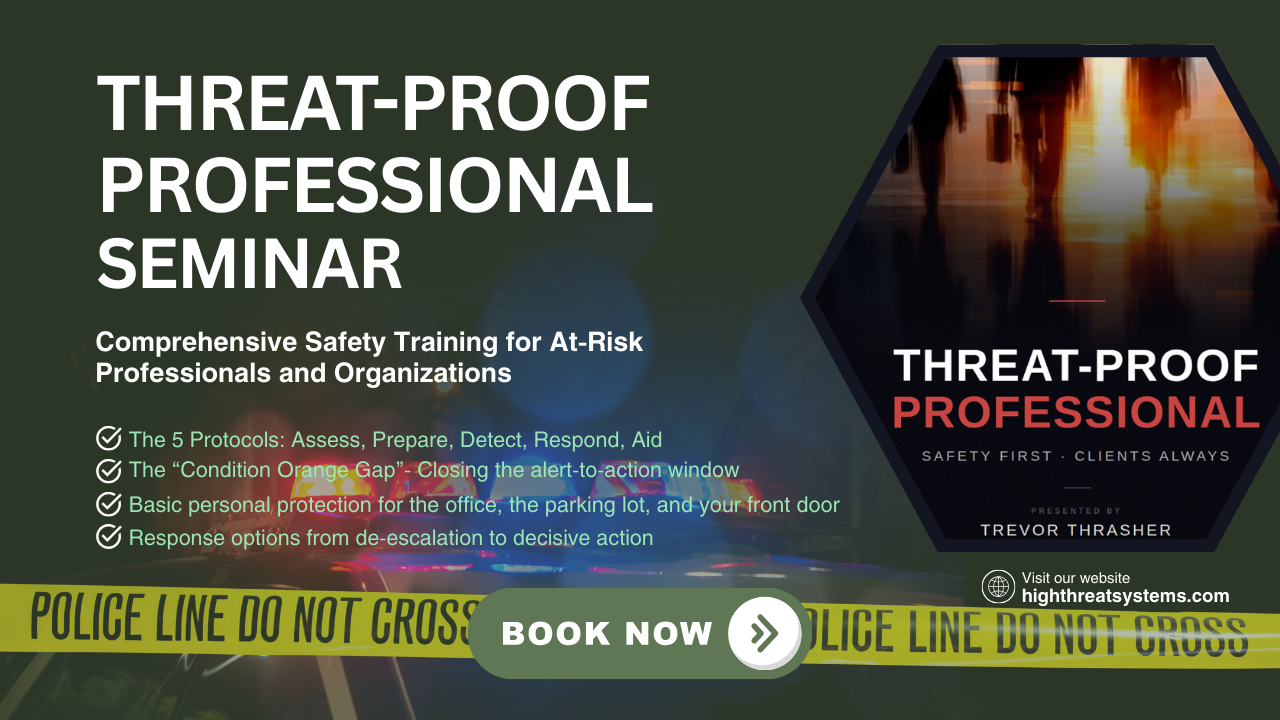
Threat-Proof Professional Seminar
Safety Protocols for Professionals Who Face Dangerous People
A 60–90 minute program to equip your team with the mindset, awareness, and protocols to stay safe when working with potentially dangerous clients, patients, and the public.
SAFETY FIRST - CLIENTS ALWAYS
Why Your Organization Needs This Now
Your professional training taught your people how to help others. It didn't teach them what to do when someone stands up, blocks the door, and they realize they're alone.
A judge was shot through his front door by someone claiming to be looking for a lost dog. A mental health counselor was stabbed to death when a former client burst into her office unannounced. A state legislator and her husband were murdered at 2 AM by an attacker posing as a police officer. A flight attendant was killed in downtown Denver on an overnight layover.
These aren't hypotheticals. They're headlines from the past few months. And the data confirms what the headlines suggest
Your team deserves the tools to survive and prevail. The Active Threat Response Seminar delivers battle-tested strategies to make that a reality.
The threat is growing — and organizations are behind.
Workplace violence has been the #1 security concern for corporate security leaders every year since 2021. It's not new. It's accelerating (Security Magazine, 2025).
46% of chief security officers say threats against their people have increased in the last two years — rising to 66% in the tech sector alone (Allied Universal, 2025).
Your people feel it — even if they're not telling you.
42% of workers feel neutral, unsafe, or very unsafe on the job. Nearly half your workforce lacks confidence in their own safety (OSHA Outreach, 2025).
Only 26% of employees say their safety concerns are "always" taken seriously by management. 61% say "sometimes." That gap is where incidents happen (OSHA Outreach, 2025).
Some industries are hit harder than others — but no one is immune.
75% of all nonfatal workplace violence occurs in healthcare and social service settings — the people whose job is to help others are the most likely to be attacked (NIOSH).
46% of hospitality workers report witnessing workplace violence — the highest rate of any sector surveyed (Traliant, 2025).
The cost of doing nothing is real.
Organizations that suffered a single security incident lost an average of $9 million in revenue. Investors say a physical security event can reduce a company's value by up to 32% (Allied Universal, 2025).
Equip Your Team to Confidently Handle Risk and Work
Led by Trevor Thrasher — retired Green Beret, SWAT officer, and counter-terrorism expert — the Threat-Proof Professional Seminar gives your workforce a personal safety system adapted from counter-terrorism and executive protection. This isn't about creating fear — it's about closing the gap between awareness and action so your people can recognize danger early and respond decisively.
The 5 Protocols Framework
Assess: Pre-contact risk assessment. Every meeting isn't the same risk — your protective measures should match your risk level.
Prepare: Set conditions in your favor. Room setup, positioning, reducing isolation, increasing exit options.
Detect: Read the warning signs early using the ABCDs of Awareness — Appearance, Behavior, Communication, Display. Spot pre-violence indicators before they escalate.
Respond: Close the Condition Orange Gap — the critical moment between recognizing danger and taking action. Response options from de-escalation to the Basic Defensive Response to the Tactical Twos.
Aid: Basic trauma medical skills. Self-defense, self-extract, self-treat. Be your own first responder in the first 60 seconds.
Who Benefits?
Perfect for:
Judges, attorneys, and court personnel
Social workers and probation officers
Healthcare workers and counselors
Education professionals and administrators
Any organization whose people face potentially dangerous clients or the public
Workers who travel frequently or visit clients in their homes
Trusted by Fortune 100 companies, law enforcement agencies, and government organizations nationwide.
About Trevor Thrasher
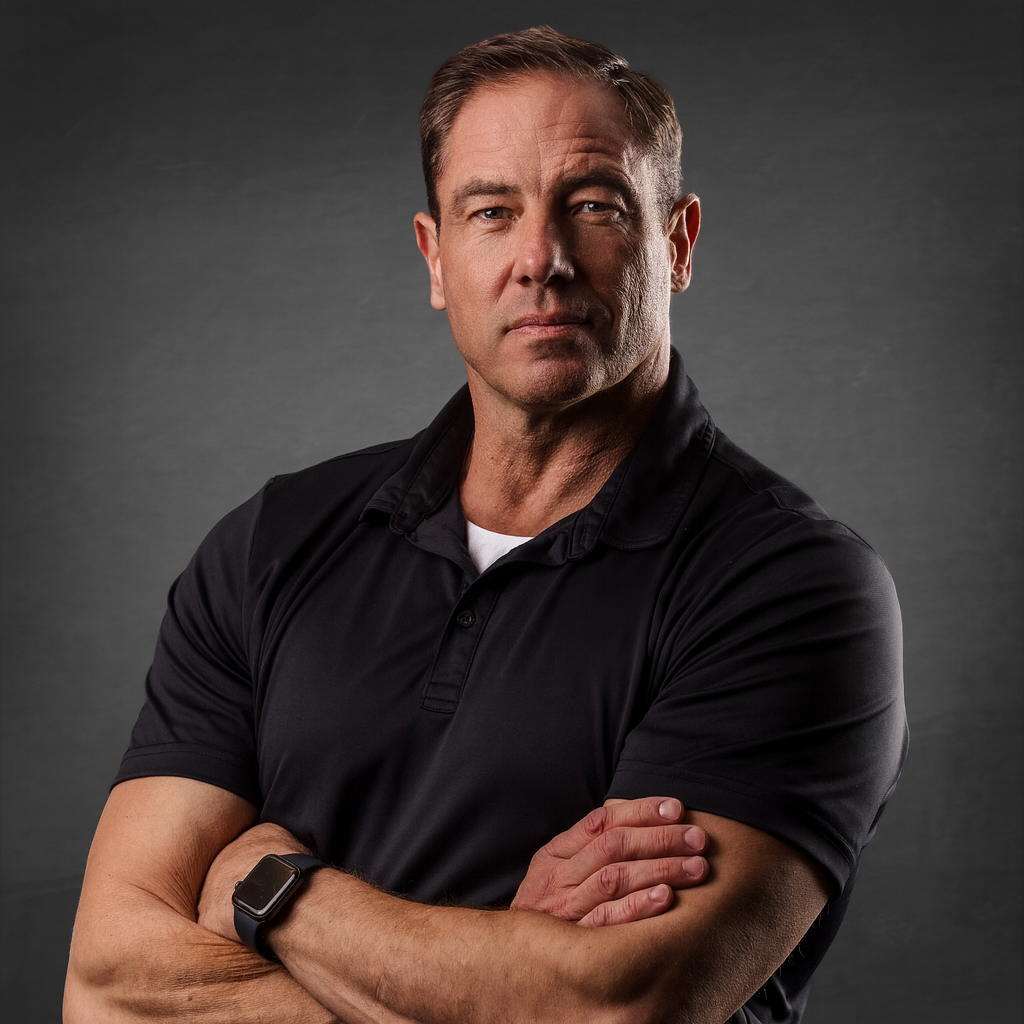
With over 30 years as a Green Beret, SWAT officer, and counterterrorism contractor, Trevor Thrasher brings unmatched expertise to personal safety training. Having trained over 30,000 civilians, police, and military personnel through his company, he's a trusted advisor to CEOs, police academies, and tactical teams across the U.S.
Selected by NASRO as the national training resource for active shooter response training for school resource officers
Featured expert in national law enforcement training programs, and as a court-approved use of force expert witness
Creator of OSS: Operative Self-Security — Special Operations for Everyday Life
Partner and Director of Training at Grey Group/88 Tactical, a leading Midwest training center
Known for turning complex tactics into clear, practical skills
Trevor’s programs translate elite-level strategies into tools that busy professionals can use to stay safe and lead with confidence.
Our Team

John Doe

John Doe

John Doe

John Doe
AS SEEN ON




Why Invest in Threat-Proof Professional?

Protect Your People; Show Their Worth
Equip your team with protocols to recognize and respond to threats — from the office to the parking lot to their front door.
Reduce Organizational Risk
Proactive training reduces liability and demonstrates your commitment to duty of care beyond standard compliance.
Close the Condition Orange Gap
Most people freeze between recognizing danger and taking action. This seminar eliminates that gap with predetermined response protocols.
Seminar Details
› Length: 60–90 minute seminar, or half-day workshop (3–4 hours) with hands-on drills and scenario training
› Format: Live on-site, virtual, or hybrid presentation
› Audience: Customizable for leadership, staff, or mixed groups
› Delivery: Engaging, practical, and tailored to your organization's needs
› Bonus: Each participant receives the Threat-Proof professional: 5 Safety Protocols for Professionals Who Face Dangerous People digital guide and/or enrollment in the Street S.M.A.A.R.T.S. Pro Certification course for continuing education.

The Extra Mile: How to unlock your highest potential
Unlock the secret to better digestive health with 'Gut Feeling.' Discover how to nourish your gut and improve your overall well-being. ... more
mind and body
08 April 2024 • 7 min read

The Extra Mile: How to unlock your highest potential
Unlock the secret to better digestive health with 'Gut Feeling.' Discover how to nourish your gut and improve your overall well-being. ... more
mind and body
08 April 2024 • 7 min read
Take the First Step Toward a Safer Workforce
Investing in the Threat-Proof Professional Seminar is more than training — it's a leadership decision that builds confidence, reduces risk, and shows your team you prioritize their safety.
Contact us to customize the seminar for your team and make member and employee preparedness a cornerstone of your organization’s safety strategy.

Jane Doe