How Not To Get Your A.S.S. Handed to You
Teamwork Lessons from Unrest and Bad Tactics
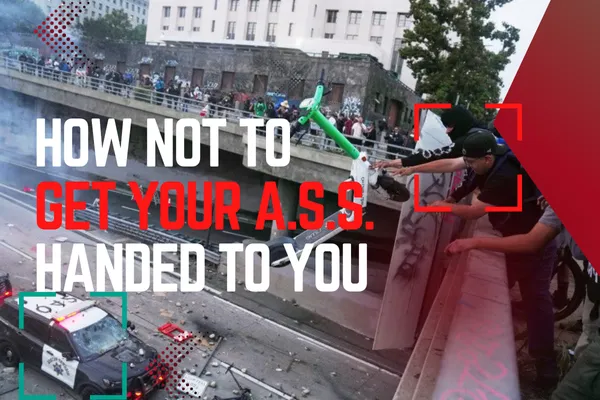
As I’ve watched recent unrest unfold, the same question keeps hitting me after every after-action review: Who the hell was in charge of those police tactics? One glaring example stands out—officers deployed in a channelized, low-ground choke point, overlooked by an overpass with high protective walls. They walked straight into a trap. Even a kid with Nerf guns knows you seize the high ground when you can. Why? It offers:
Increased visibility to spot threats.
Better mobility and escape routes.
A gravitational edge with primitive weapons like bricks, Molotov cocktails, or fireworks.
In this case, the police handed every advantage to their attackers and paid a steep price. No one died—thankfully—but the potential for serious injuries was obvious. The bigger failure? A complete lack of team structure, which brings us to the concept of A.S.S.—Assault, Support, and Security.
The A.S.S. Framework: Your Crisis Lifeline
Every military operation—ambush, raid, or basic attack—relies on A.S.S. In law enforcement, we tweak it to Contact, Cover, and Security, but the principles are rock-solid:
Assault/Contact: The person directly engaging the threat, taking it head-on.
Support/Cover: The teammate backing up the assault with overwatch, distraction, or physical assistance.
Security: The eyes on the broader scene, isolating the area, providing early warning, and stopping secondary threats. They also keep the bad guys locked down and isolated on the objective.
In the overpass mess, no one isolated the area or watched the flanks. Officers focused on the immediate fight and left their backs exposed—a textbook error. This isn’t just a police problem; it’s a lesson for anyone in a crisis, whether you’re law enforcement, security, or a civilian with family in a public place.

Real-World Application: Roles in Action
Picture this: You’re in a room when an attacker bursts in. Here’s how A.S.S. plays out:
Contact/Assault: One person jumps in, fighting for control of the firearm or subduing the threat.
Cover/Support: A second throws objects to distract the attacker, then helps take them down or secure their legs.
Security: A third watches the doorway, locks it when safe, and scans for more threats.
Once the attacker’s down, roles shift:
Support drags the threat to a corner and contains them.
Contact repositions, ready for the next fight.
Security keeps scanning or meets responding police to clarify you’re the good guy with a gun—a topic for another article.
Now, say you’re with a friend during a robbery, and you disable an armed robber with a shot. You’re the Contact. Your buddy becomes Cover, securing the weapon or suspect, while a third person—Security—monitors the crowd and intercepts police to avoid misidentification.
Why Roles Matter: Division of Labor Under Fire
We’re terrible at multitasking under stress. If you’ve ever wrestled a toddler into a car seat while they juggle a water bottle and an iPad, you get it. In a crisis:
Contact can’t split focus—they give 100% to the threat.
Cover adds force, watches blind spots, and protects the Contact’s flanks.
Security handles the crowd, exits, and secondary threats, staying slightly detached to survey the scene.
Alone, you cycle through these roles sequentially: neutralize the threat, scan, take a breath, check your security, and communicate with others. Trying all three at once? You’ll do none well. That’s where untrained people fail—they freeze, film, or gape while one brave soul fights. In a multi-threat scenario, your team’s effectiveness hinges on clear roles.
Turning Panic into Purpose
If you’re with someone you trust, a quick command can break the freeze:
“Control his legs.”
“Scan the crowd.”
“Meet the cops.”
Even a loved one unused to action can step up with guidance. With two people, one is Contact, the other Cover and Security. During peak intensity, both may need full effort, but as soon as there’s a break, slip into your secondary role.
Watch the police square off and try ot manage their teamwork during a riot here:

What Usually Goes Wrong—and How to Fix It
Untrained groups devolve into chaos. One person struggles, while others stand useless with phones out, all focused on the immediate action right in front of them with complete tunnel vision, reacting instead of preparing for hidden threats or the next critical issue. Don’t be that team. Know your role, do it well, and communicate—verbally or nonverbally—to assign or switch duties. Teamwork multiplies capability, but only when it is coordinated.
If you’re on a church security team or in a high-risk job, train this in realistic scenarios. At my company, Grey Group Security, we’ve honed these tactics with hundreds of police agencies and private teams, including major SRO organizations. This isn’t theory—it’s proven in the field. Greygroupsecurity.com
Key Takeaways
Assign Roles: Use Assault/Contact, Support/Cover, and Security to cover all bases.
Focus Deeply: One task, done well, beats half-assed multitasking, but sometimes you have little choice.
Communicate Clearly: Quick directives keep the team aligned.
Train Hard: Rehearse with your group to turn panic into action, flowing seamlessly into your proper roles.
Final Word
Don’t let poor tactics or unorganized teamwork get your A.S.S. handed to you. Learn from recent unrest—seize the initiative, assign roles, and move as a unit. Stress management and mindset are your foundation. For down-and-dirty basics on staying sharp under pressure, check out my Street Savvy Pro Guide at [Learn More About Pro-Level Threat Management Here].
Get the newletter direct and access the blog here: https://highthreatsystems.com/newsletter-sign-up
Stay safe, stay sharp, and protect your A.S.S.
— Trevor Thrasher
Retired Green Beret | SWAT Officer | Counter-Terrorism Contractor
Founder, Grey Group Security


